

Preamble
Phase change phenomena is closely associated with multiphase flow. Evaporation, boiling and condensation are commonly encountered in engineering. Understanding of this phenomena is vital for the design of process equipments. Moreover, heat transfer is often associated with multiphase flow. Transfer of heat can be through different modes. The present experiment deals with a multiphase phenomena where heat transfer through different modes is involved. The experiment is important for cryogenic engineering though the phenomena is a fundamental interest and can be studied to understand some basic transport processes. It also gives an idea of some important measurement techniques.
Background
Evacuation of the annular space between the double walled, small laboratory-scale cryogenic storage vessels is an effective means of insulation. Two components of heat transfer, namely, solid conduction and gaseous convection, are eliminated by the use of vacuum insulation. The dominant modes of heat transfer are the radiation heat transfer from the hot outer wall to the cold inner vessel and by free molecular conduction through the residual gas within the annular space. If the pressure of the gas in the annular space is low enough that the mean free path of the gas is greater than the distance between the two surfaces, the type of conduction differs from the usual continuum-type conduction at ambient pressure. For ordinary conduction with constant thermal conductivity, there is a linear temperature gradient within the medium transferring heat. On the other hand, for free molecular conduction, the gas molecules rarely strike each other; thus an individual gas molecule travels across the gas space without transferring energy to other gas molecules.

Theory
The radiant heat transfer rate between two surfaces is given by the modified Stefan-Boltzmann equation:
`Q_r=F_e F_(1-2) sigma A_1(T_2^4-T_1^4)` .......(1)
where,`F_e`=emissivity factor
`F_(1-2)`=configuration
`sigma ="Boltzmann constant"=56.69nW/(m^2.k^4)`
`A_1`=area of surface 1
T=absolute temperature
For cryogenic-fluid storage vessels, in which the inner vessel is completely enclosed by the outer vessel,F(1-2)=1,where subscript 1 refers to the enclosed surface(inner vessel) and the subscript 2 refers to the enclosure (outer surface).The emissivity factor for diffuse radiation for concentric spheres or cylinders is given by
`(1/F_e)=(1/e_1)+(A_1/A_2)(1/e_2-1)` ........(2)
Free molecular conduction can occur when mean free path(lambda) is less than the dimension of the annular space.The mean free path may be determined from
`lambda=(mu/p)sqrt((pi*R*T)/2)` ........(3)
where,μ=gas viscosity at temperature T
p = absolute pressure of the gas
The heat conduction rate by free molecular conduction is given by:
`Q_g=Gpa_1(T_2-T_1)` ......(3a)
The following relation gives the accommodation coefficient factor:
`G=F_a(gamma+1)/(gamma-1)*sqrt(R)/(8*pi*T)` ........(4)
γ=specific heat.
where, a1 and a2 are the accommodation coefficients of surface 1 and 2 respectively. Their values are given in Table 1 shown below [Reference: Cryogenic Systems by R. F. Barron, 2nd Ed., Oxford University Press, 1985].
The total heat transfer rate is then given by:
`(1/F_a)=(1/a_1)+(A_1/A_2)(1/a_2-1)` ........(5)
|
Temperature (K) |
Gas |
||
|
Helium |
Hydrogen |
Air |
|
|
300 |
0.29 |
0.29 |
0.8-0.9 |
|
78 |
0.42 |
0.53 |
1.0 |
|
20 |
0.59 |
0.97 |
1.0 |
The total heat transfer rate is then given by:
`Q = Q_r+Q_g` ........(6)
The rate of evaporation of cryogenic liquid (m) can be calculated once the total heat transfer rate is known:
`m = (Q/h_(f*g))` ........(7)
where `h_(f*g)`=enthalpy of evaporation of cryogenic fluid.
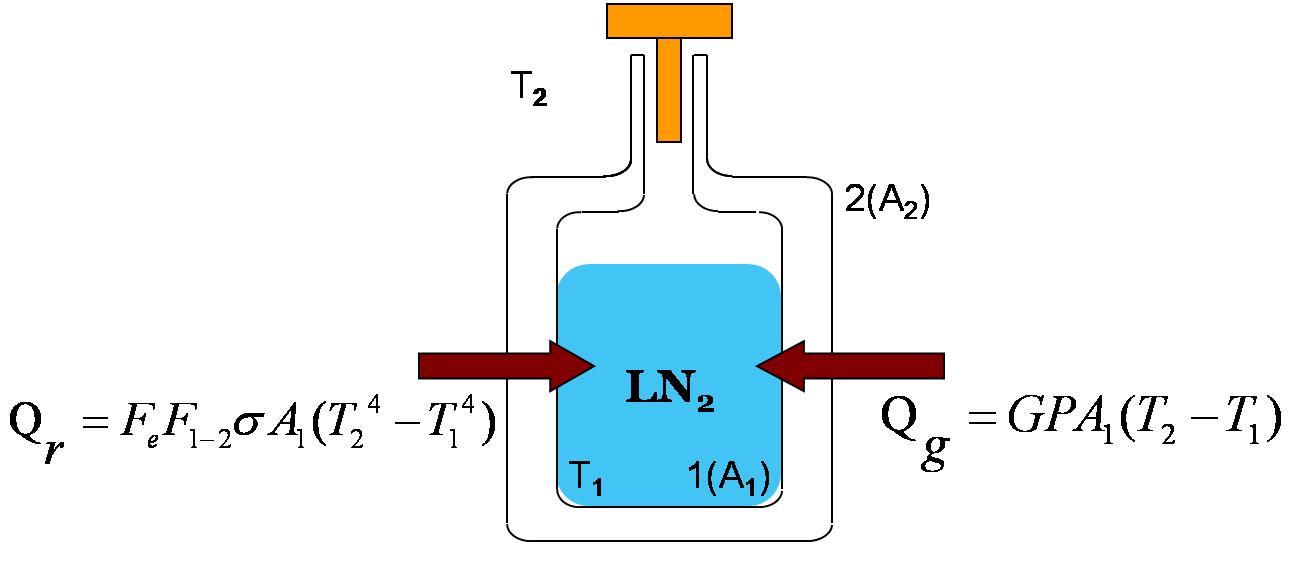
Details of the actual system
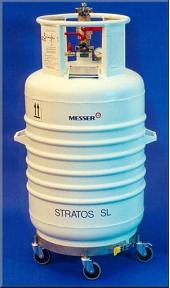
Fig.1-Typical cryogenic vessel.
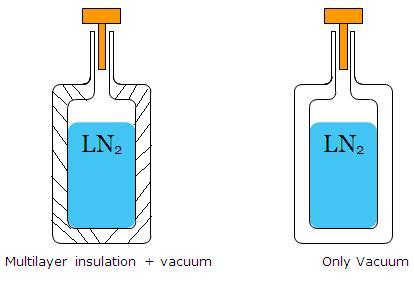
Fig.2: Different types of insulations used in cryogenic vessels.
In case of the first type of insulation all the three modes of heat transfer radiation, convection and conduction are present. In the second case of insulation only radiation and free molecular conduction is important. The present experiment simulates the cryogenic vessel with vacuum type insulation.
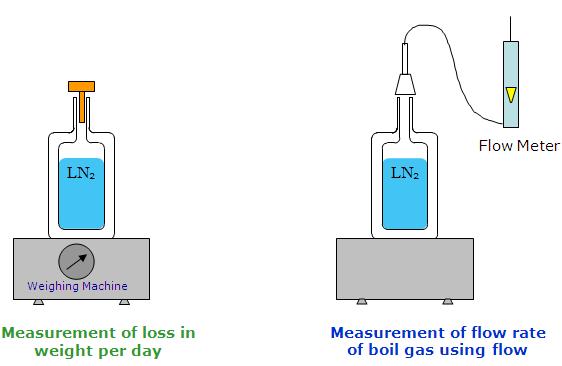
Fig.3-Two different arrangements for estimating the evaporation loss.
Above two different arrangements for estimating the evaporation loss is shown. In one case, the entire cryogenic vessel is put on an electronic balance and the gradual change in the reading is noted to find out the rate of evaporation. In the second case, the evaporated gas is made to pass through a flowmeter which allows continue measurement of the mass flow rate.
Operations
This virtual experiment needs labview software installed in the computer. Alternatively one can download the stand-alone labview installer, double click the file and run the program"
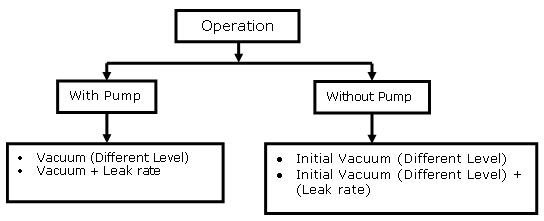
Fig.4- different variations of the proposed experiment.
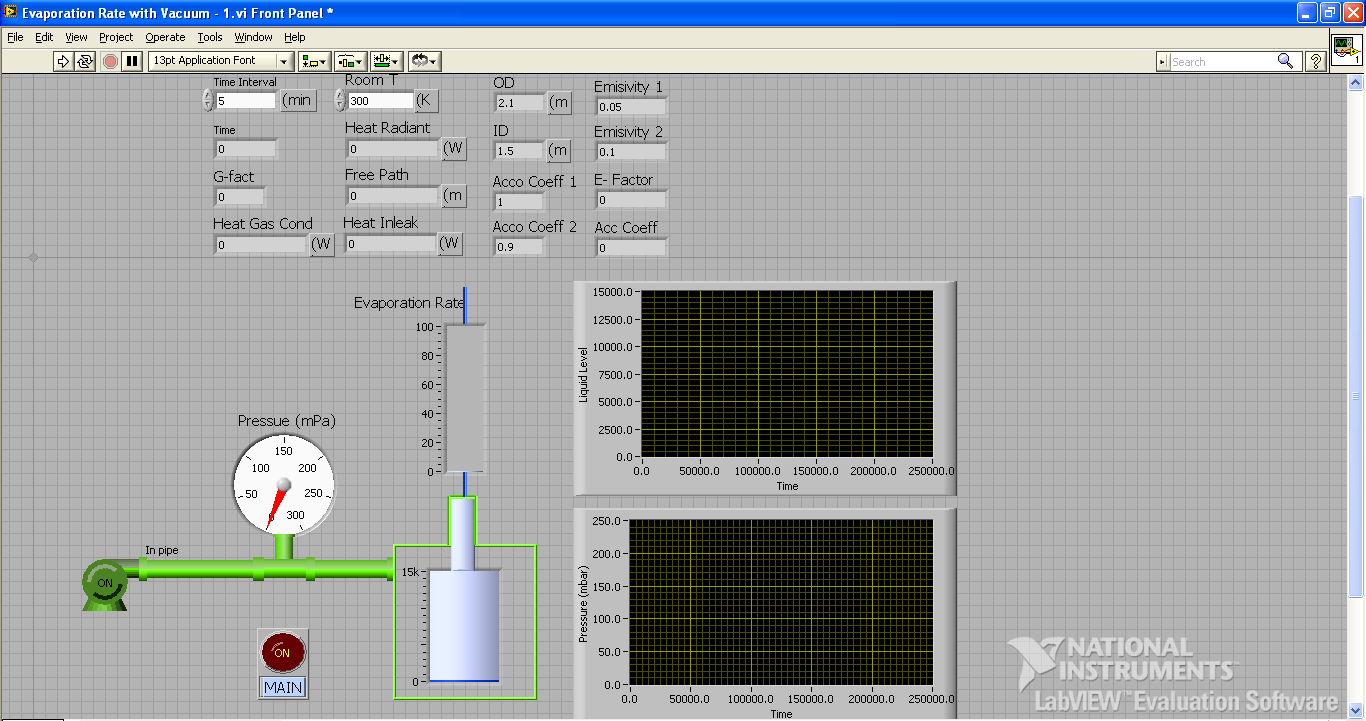
Fig.5-Front end of the labVIEW panel.
Download
LabVIEW Runtime Engine Click Here to Download
Evaporation-1 Installer Click Here to Download
Evaporation-2 Installer Click Here to Download
Discussions
Discuss the effect of pumping rate, leakage rate and vessel dimension on the rate of evaporation from the vessel.

Questionnaire
- Compare the two different modes of experiments for estimating the evaporation rate from the cryogenic vessel mentioned above.
- Modify the present experiment so that the latent heat of vaporization of the cryogenic liquid can be determined.
- Can you suggest a method for estimating the leakage rate?

Test Your Knowledge!!

- Barron, R. F. Cryogenic Systems, 2nd Ed., Oxford University Press, 198.
- Kraftmakher, Y. Experiments and demonstrations in physics. World Scientific Publishing Co.(P) Ltd., 2007
- Neil T E, Schulze P D. Mechanical equivalent of heat : Electrical method by vaporization of liquid nitrogen, Am. J. Phys.,Vol.54, 474-475, 1986.
- Tompson C W, White H W. Latent heat and low temperature heat capacity experiment for general physics laboratory,Am. J. Phys., Vol.51, 362-364, 1983.